
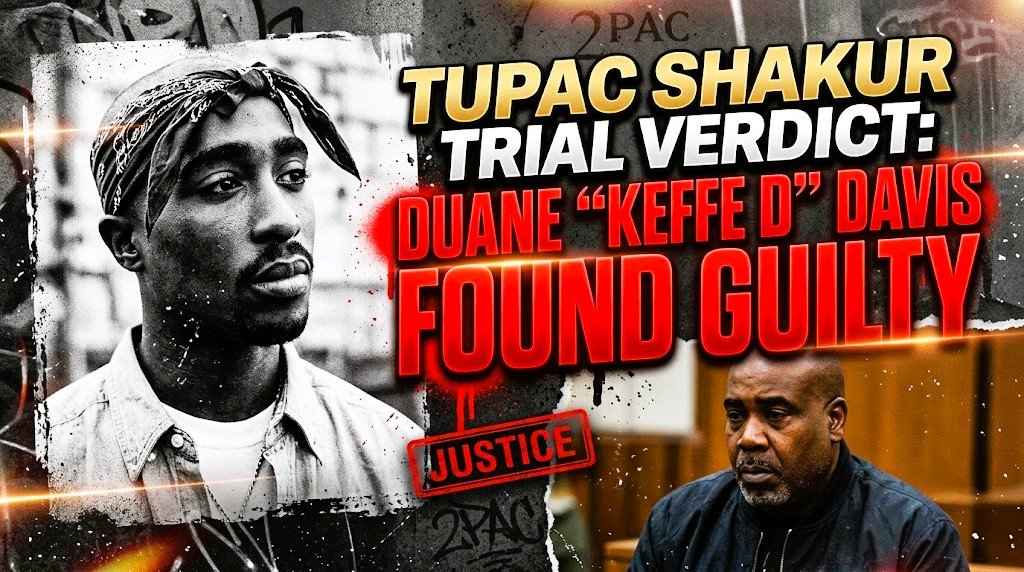
Tupac Shakur Trial Verdict: Duane “Keffe D” Davis Found Guilty
Tupac Shakur Trial Verdict has finally been delivered nearly three decades after the legendary rapper was fatally shot in Las Vegas. A Nevada jury found Duane “Keffe D” Davis guilty of first-degree murder in connection with the 1996 killing of Tupac Shakur.
The verdict marks the first conviction in the long-running case, which remained one of the most closely watched unsolved murders in music history.
Tupac Shakur Trial Verdict Brings Decades-Old Case to a Close
The Tupac Shakur Trial Verdict was reached after the jury deliberated for less than three hours following a weeks-long trial.
Davis, 63, was convicted of murder with a deadly weapon. Prosecutors argued that he orchestrated the attack that killed Shakur, even though he was not accused of personally pulling the trigger. Under Nevada law, a person who helps direct or facilitate a murder can be held criminally responsible for the killing.
Davis has said he plans to appeal the conviction. He could face a life sentence.
How Tupac Shakur Was Killed
Tupac Shakur was shot on September 7, 1996, while sitting in a vehicle at a Las Vegas intersection.
A white Cadillac pulled alongside the car carrying Shakur and music executive Marion “Suge” Knight before shots were fired.
Shakur was struck multiple times and died six days later at the age of 25.
The killing became one of the most famous unsolved cases in American music, with investigators facing significant difficulties in establishing who was responsible.
What Prosecutors Said About Davis
Prosecutors argued that Davis organized the shooting as an act of retaliation.
Earlier that evening, Shakur and members of his entourage had been involved in a confrontation with Orlando “Baby Lane” Anderson, Davis’ nephew, at the MGM Grand following a Mike Tyson boxing match.
According to prosecutors, the confrontation motivated Davis and others to search for Shakur later that night.
Prosecutors said Davis obtained a firearm and helped coordinate the attack from the white Cadillac.
Davis Did Not Pull the Trigger
An important point in the case is that prosecutors did not claim Davis personally fired the shots.
Instead, the prosecution argued that he was criminally responsible for orchestrating the attack and providing the weapon.
The identity of the person who actually fired the fatal shots was not established by prosecutors.
The other men prosecutors said were inside the Cadillac have since died, leaving Davis as the only surviving person connected to the vehicle.
Evidence From Davis’ Own Statements
One of the most important elements of the prosecution’s case was Davis’ own history of discussing the killing.
Davis had spoken publicly about his alleged involvement in interviews and documentaries and described the incident in his 2019 memoir, “Compton Street Legend.”
Prosecutors also presented recordings from conversations in which Davis discussed his role.
They argued that although details of his accounts changed over time, he repeatedly placed himself inside the white Cadillac during the shooting.
Defense Challenged Davis’ Statements
Davis’ defense team disputed the prosecution’s interpretation of those statements.
His lawyer argued that Davis had exaggerated or embellished stories about the killing for publicity and financial benefit.
The defense also highlighted the lack of physical evidence directly placing Davis at the Las Vegas crime scene.
However, prosecutors maintained that Davis’ repeated admissions and consistent core details were sufficient to establish his involvement.
A Nearly 30-Year Investigation
The case remained unresolved for almost three decades.
For years, investigators struggled to secure enough evidence and cooperation from potential witnesses.
The investigation gained renewed attention after Davis began publicly discussing his alleged role.
He was eventually arrested in 2023, becoming the first person charged in connection with Shakur’s killing.
Why the Verdict Is Significant
The conviction represents a major development in one of the most famous cases in hip-hop history.
Tupac Shakur was one of the most influential and commercially successful rappers of his generation. His music, acting career and cultural influence continued to grow after his death.
The circumstances surrounding his murder also became the subject of decades of speculation and conspiracy theories.
The guilty verdict provides a legal conclusion to a major part of the case, although questions about the individual who fired the shots remain.
Tupac’s Lasting Legacy
Tupac Shakur died at just 25 years old, but his influence on music and popular culture has continued for decades.
His albums, lyrics and performances have influenced generations of artists and fans.
His death also became closely associated with the violent tensions surrounding the hip-hop industry during the 1990s, particularly the rivalry between groups connected to the West Coast and East Coast rap scenes.
The trial brought renewed attention to that era and the circumstances surrounding Shakur’s final days.
What Happens Next for Duane Davis?
Following the guilty verdict, Davis is expected to proceed toward sentencing.
Reports indicate that he faces the possibility of life imprisonment without parole.
Davis has indicated that he intends to appeal the conviction.
The sentencing phase will therefore be the next major development in the case.
Tupac Shakur Trial Verdict: Key Takeaway
The Tupac Shakur Trial Verdict has resulted in Duane “Keffe D” Davis being found guilty of first-degree murder for his role in orchestrating the 1996 killing of the rap icon.
The jury’s decision follows a decades-long investigation and a weeks-long trial in Las Vegas.
Although Davis was not accused of pulling the trigger, prosecutors successfully argued that he helped organize the retaliatory attack and was legally responsible for the murder.
The conviction represents a major breakthrough in the nearly 30-year-old case and closes an important chapter in one of hip-hop’s most enduring mysteries.
Frequently Asked Questions (FAQs)
1. What was the Tupac Shakur Trial Verdict?
A Nevada jury found Duane “Keffe D” Davis guilty of first-degree murder in connection with Tupac Shakur’s 1996 killing.
2. Who is Duane “Keffe D” Davis?
Davis is a former South Side Compton Crips gang leader who prosecutors accused of orchestrating the attack that killed Tupac Shakur.
3. Did Duane Davis shoot Tupac?
Prosecutors did not accuse Davis of personally pulling the trigger. They argued that he helped organize the attack and provided the firearm.
4. When was Tupac Shakur killed?
Tupac Shakur was shot in Las Vegas on September 7, 1996, and died six days later from his injuries.
5. Why did prosecutors say Tupac was targeted?
Prosecutors said the shooting was retaliation following a confrontation involving Davis’ nephew, Orlando “Baby Lane” Anderson, and members of Shakur’s entourage.
6. What evidence was used against Davis?
The prosecution relied heavily on Davis’ own interviews, recordings and statements, including material from his 2019 memoir.
7. How long did the Tupac murder case remain unresolved?
The case remained unresolved for nearly 30 years before Davis was convicted.
8. Can Davis appeal the conviction?
Yes. Davis has indicated that he plans to appeal the verdict.
9. What sentence could Davis receive?
Davis could face life imprisonment, depending on the final sentencing.
10. Why is the verdict important?
It represents the first conviction in the nearly three-decade-old Tupac Shakur murder case and provides a major legal development in one of the most famous unsolved killings in music history.
