
KKR and Singtel Acquire Full Control of STT GDC in $5.2 Billion Deal, marking one of the most significant transactions ever seen in Southeast Asia’s digital infrastructure space.
A consortium led by KKR and Singapore Telecommunications (Singtel) has agreed to pay S$6.6 billion (about $5.2 billion) in cash to acquire the remaining shares of ST Telemedia Global Data Centres (STT GDC), giving the partners full ownership of the fast-growing data centre platform. The announcement comes amid an intensifying global race to secure computing capacity needed for artificial intelligence and cloud services.
A Record-Breaking Deal for Singapore and Southeast Asia
Based on the price paid for the 82% stake not already owned by the consortium, the transaction implies an enterprise value of roughly S$13.8 billion for STT GDC. It stands as Singapore’s largest deal in four years and the biggest data centre acquisition ever completed in Southeast Asia, underlining the strategic importance of digital infrastructure as AI-driven demand surges.
The market reacted positively. Singtel shares opened nearly 2% higher, touching a record S$4.95, and later closed up 1%, outperforming Singapore’s benchmark index.
A Growing Global Data Centre Platform
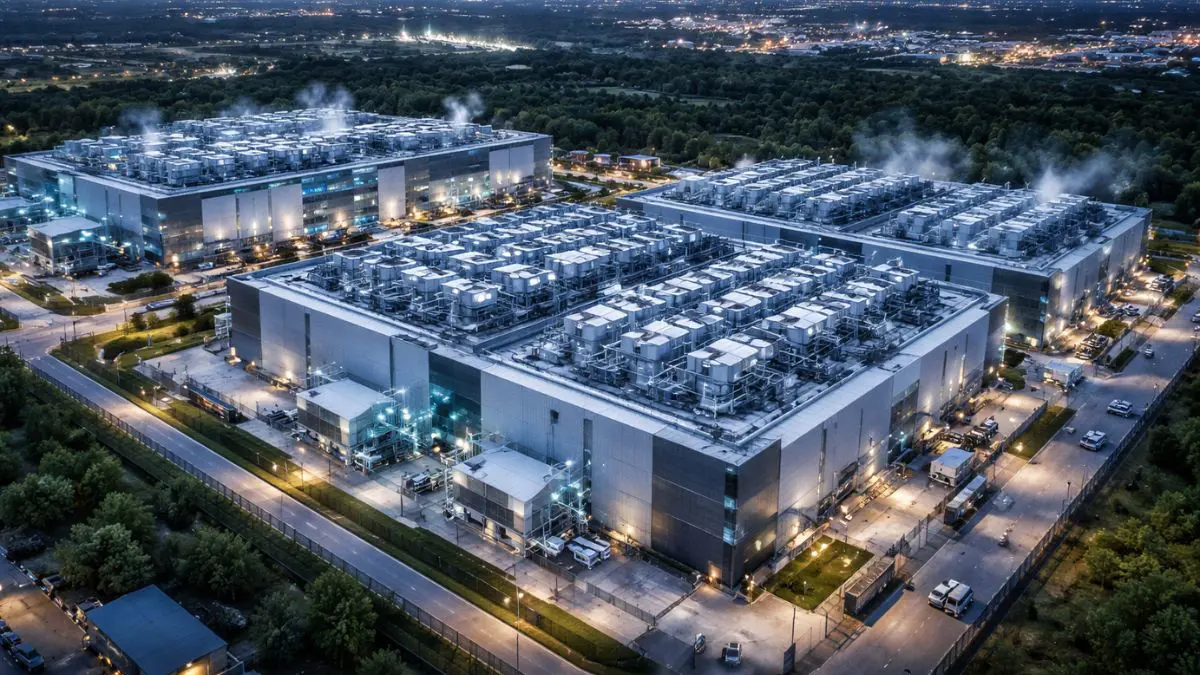
Founded in 2014 and headquartered in Singapore, STT GDC has rapidly expanded into a global platform, operating across 12 major markets in the Asia-Pacific region, the UK, and Europe. The company offers co-location, connectivity, and 24/7 support services, with a total design capacity of about 2.3 gigawatts—an attractive footprint as hyperscalers and AI players hunt for scalable, power-secure facilities.
Ownership Structure and Strategic Rationale
Under the agreement, the KKR-led consortium will buy the remaining shares from ST Telemedia, through STT Communications, an indirect subsidiary of Temasek Holdings. Once the deal closes, KKR will hold 75% of STT GDC, while Singtel will own the remaining 25%, factoring in the conversion of existing preference shares.
Analysts see the move as a natural extension of Singtel’s broader digital infrastructure strategy. Market watchers say the acquisition strengthens Singtel’s position as one of Asia’s largest data centre operators and creates a longer runway for growth beyond 2028, supported by STT GDC’s development pipeline and strong regional exposure.
Financing and Impact on Singtel
The cash payment will be made in two equal tranches, with half due at completion and the balance payable about a year later. To fund the acquisition and future capital expenditure, the consortium has secured around S$5 billion in debt facilities. Singtel will contribute S$740 million through an equity injection, funded from its internal cash resources.
Importantly, Singtel said the transaction is not expected to materially affect its credit rating or dividend policy.
Long-Term Bet on Digital Infrastructure
KKR and Singtel first invested in STT GDC in June 2024 with a S$1.75 billion commitment. Speaking on the deal, KKR executives described digital infrastructure as one of the most compelling long-term investment themes globally, calling the acquisition a rare chance to deepen their partnership with Singtel through a scaled, global platform.
Temasek, meanwhile, framed the transaction as a handover to owners well-positioned to accelerate STT GDC’s next phase of growth.
What Comes Next
The deal is expected to close in the early part of the second half of 2026, subject to regulatory approvals and customary closing conditions. Citigroup acted as lead financial adviser and provided acquisition financing to the consortium, with Bank of America also advising. JPMorgan Chase served as the sole financial adviser to ST Telemedia.
As AI workloads and cloud adoption continue to soar, the acquisition positions KKR and Singtel at the heart of Asia’s rapidly expanding data centre ecosystem—right where future demand is expected to be strongest.
