
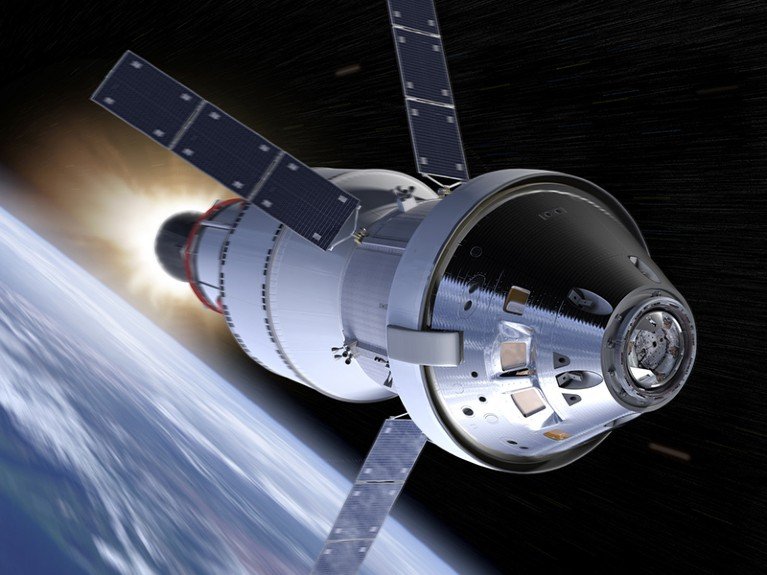
As anticipation builds for humanity’s return to deep space, NASA works to resolve problems during a critical test before the launch of its historic Moon mission. The agency is currently conducting one of the final major evaluations of its powerful Space Launch System (SLS) rocket — a key milestone before sending astronauts beyond Earth’s orbit for the first time since the Apollo era more than 50 years ago. If preparations stay on track, the mission could lift off as early as February 8.
What Is the Wet Dress Rehearsal?
The ongoing evaluation, known as a wet dress rehearsal, is designed to simulate launch-day conditions as closely as possible. During this process, engineers load the rocket with more than 700,000 gallons of ultra-cold liquid propellants and practice the full countdown sequence.
However, a few hours into the operation, teams detected hydrogen leaks — a familiar challenge. Similar issues affected earlier SLS rehearsals in 2022 before the uncrewed Artemis I mission, which ultimately launched about six months after its initial testing attempts.
Liquid hydrogen, stored at a frigid –423°F, is the primary fuel for the SLS. Its extremely small molecular structure allows it to escape easily, making it one of the most difficult rocket fuels to handle safely.
Progress Despite Technical Challenges
Despite the leak concerns, NASA successfully filled the rocket’s tanks. By early evening, the vehicle had entered replenish mode, a stage where small amounts of fuel are continuously added to replace what naturally boils off.
Engineers then moved toward the terminal countdown sequence — a simulated launch phase that includes final system checks and operational verifications.
Later in the evening, another minor issue emerged when a launchpad “closeout team” encountered a valve problem while preparing the crew capsule hatch area. The situation required additional time but did not halt overall progress.
The rehearsal is expected to run the countdown to less than one minute before a simulated liftoff, mimicking a real launch scenario without actually igniting the engines.
Why This Test Matters
The outcome of this rehearsal will play a major role in determining the launch schedule for the Artemis II mission, which could fly within several windows between early February and late April.
When the mission launches, astronauts Christina Koch, Victor Glover, Reid Wiseman, and Canadian astronaut Jeremy Hansen will ride aboard the SLS. Their Orion spacecraft will separate from the rocket and travel around the Moon before returning to Earth.
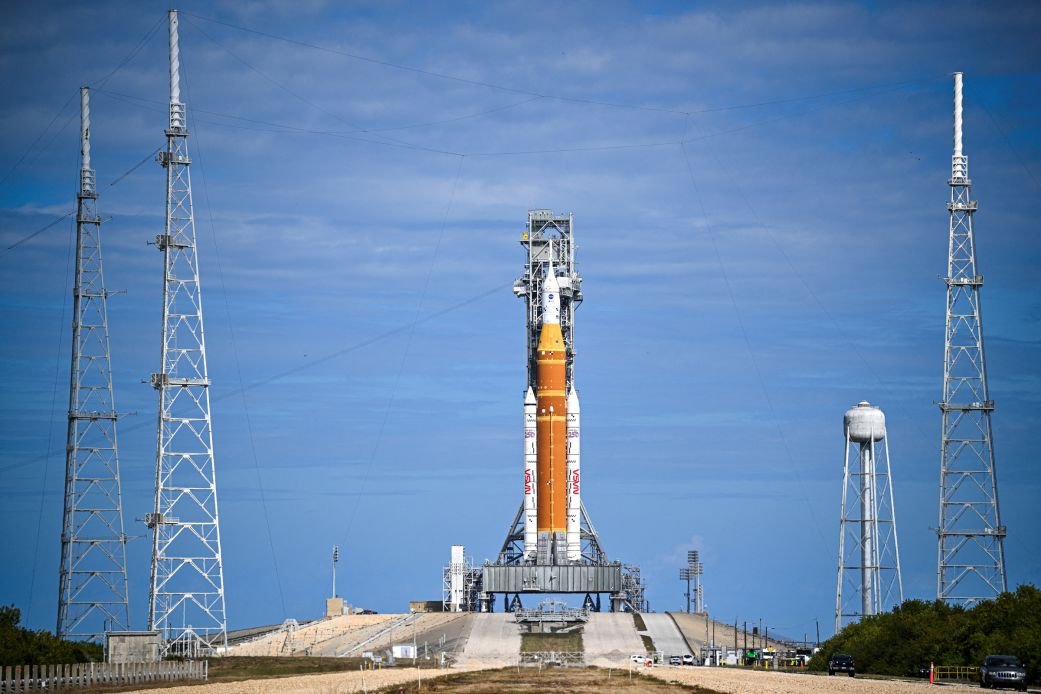
The crew has already entered quarantine in Houston — a standard precaution to protect astronauts from illness before flight. Once testing is complete, they are expected to travel to Florida’s Kennedy Space Center for final launch preparations.
A Journey Beyond Past Limits
Although Artemis II will not land on the lunar surface, the mission will carry its crew farther into space than any humans have traveled since Apollo 13 in 1970 — setting a new milestone for human exploration.
Lessons Learned From Artemis I
NASA officials say the agency is better prepared this time. Multiple rehearsals and months of troubleshooting were required before Artemis I launched successfully in 2022. Those experiences have been directly applied to improve procedures for Artemis II.
Artemis launch director Charlie Blackwell-Thompson emphasized that the team has incorporated every lesson learned into the current fueling and countdown strategy.
Still, NASA is taking a cautious approach. If necessary, engineers may roll the SLS and Orion spacecraft back to the Vehicle Assembly Building for additional work. Even weather has played a role — cold temperatures recently delayed the start of testing.
Looking Ahead
The coming days will reveal whether the SLS can complete a clean rehearsal — a critical step before humans once again venture into deep space. With each test, NASA moves closer to a historic moment that will mark the beginning of a new era of lunar exploration and long-term plans for missions to Mars.
