
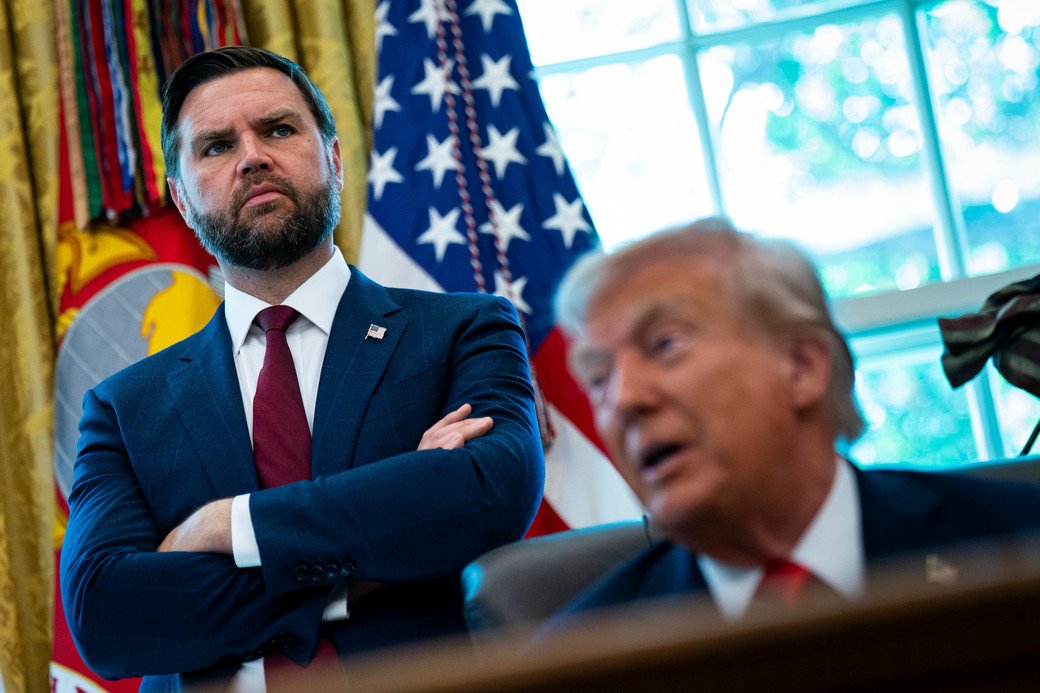
Vance’s comments about White people hinge on public ignorance, and the reaction they sparked says as much about the country as the words themselves.
Back in December 2025, social media erupted after JD Vance — the first Ohioan to serve as U.S. vice president — told a crowd at Turning Point USA’s AmericaFest that Americans no longer needed to apologize for being White. The line was brief, but the response was explosive.
Writer and influencer Yashar Ali quickly captured the moment with a pointed Threads post aimed squarely at White users: What are you doing with all the extra time now that you don’t have to apologize anymore? The sarcasm landed immediately. Thousands understood the reference, and nearly 9,000 replies followed, many dripping with humor.
Some joked about suddenly finding time to “gentle parent” elaborately named children. Others quipped about cracking down on unpermitted lemonade stands or pulling themselves up by their bootstraps while starting large families. The jokes were sharp, clever, and often genuinely funny.
But beneath the laughter sat something heavier. The fact that such a comment could come from the vice president of the United States wasn’t just absurd — it was infuriating. It wasn’t an isolated slip, either. It fit neatly into a broader pattern of dismissing history and reframing reality in ways that inflame racial tension rather than resolve it.
The Myth of White Oppression
In what some still like to call a “post-racial” America, certain leaders spend an astonishing amount of time insisting that White Americans are under siege. President Donald Trump echoed that idea in a January interview, suggesting that Civil Rights-era laws resulted in White people being treated “very badly.”
That claim ignores the basic purpose of the Civil Rights Act of 1964. Passed largely by White lawmakers, the legislation aimed to dismantle segregation and open doors to education and employment that had long been closed to Black Americans. It didn’t strip opportunity away from White people; it challenged the assumption that opportunity should default to them.
Yes, losing an automatic advantage can feel uncomfortable. Equality can feel like loss when privilege has been mistaken for normalcy. But discomfort is not oppression, and fairness is not punishment.
Believing otherwise requires willful blindness — closing one’s eyes to the injustices that Martin Luther King Jr. and countless others fought to expose and correct. It requires nostalgia for a time when “separate but equal” was law, even though it was never truly equal.
Character Over Color — Still the Point
Judging entire communities by the actions of a few has always been wrong, yet it remains disturbingly common. Crimes committed by Somali Americans in one city do not make Somali American business owners elsewhere suspect, just as wrongdoing by Irish American bar owners in Boston wouldn’t justify targeting Irish taverns in Ohio.

This isn’t complicated. Content of character over color of skin was never meant to be a poetic slogan — it was a moral standard.
Equality Is Not an Apology Tour
The push for civil rights has never been about shaming White Americans or forcing public apologies. It’s about honesty, accountability, and living up to the ideals the nation claims to cherish.
Those ideals are written plainly in the Declaration of Independence: that all people are created equal, endowed with unalienable rights to life, liberty, and the pursuit of happiness. They were echoed powerfully in King’s final speeches, where he reminded America to be true to the promises it made on paper.
Moving forward doesn’t require guilt. It requires courage — the courage to reject convenient falsehoods and accept uncomfortable truths.
Beyond the Mountaintop
Whether you agree with this perspective or bristle at it, ask yourself a simple question: don’t you want something better than endless division?
I do. I want to see the promised land King spoke of — not as a distant idea glimpsed from a mountaintop, but as a shared reality. No matter how facts are twisted or history distorted, most Americans know exactly what that promised land looks like.
Despite the division he helps fuel, I suspect JD Vance knows it too.
And here’s the irony: he’s right about one thing. White people don’t need to apologize for existing. What America needs instead is for its people — especially those with power — to reject ignorance, embrace truth, and work toward justice for everyone.
