
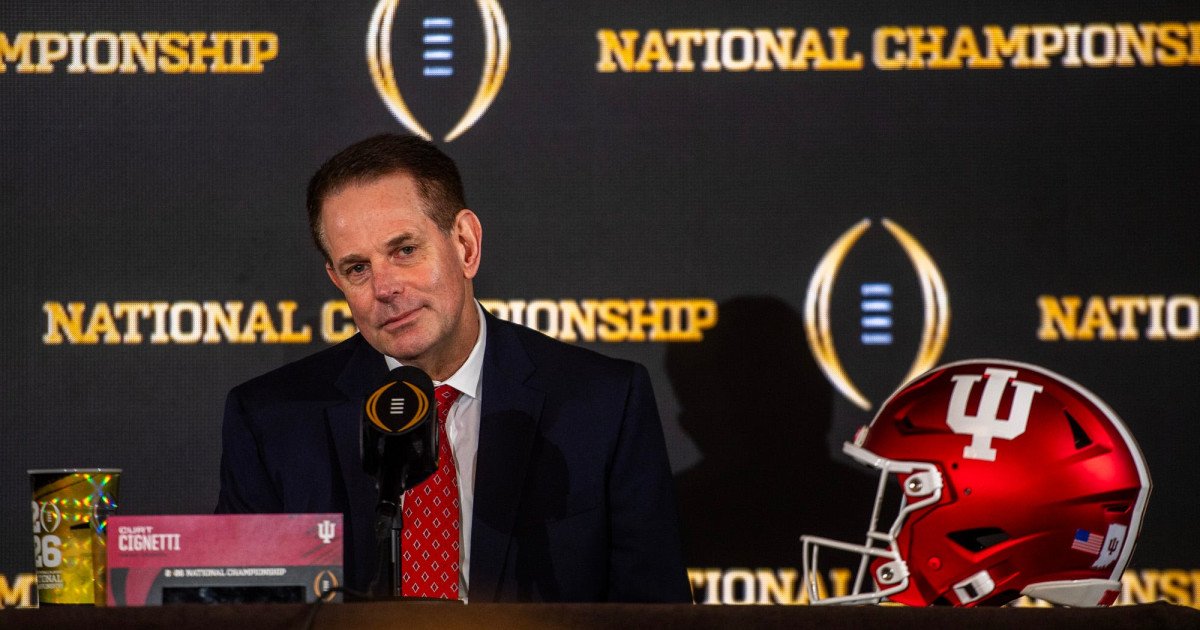
There is a temptation, in moments like this, to search for a single explanation. To compress something historic into a neat narrative. Resist it. Don’t diminish Indiana football’s national championship by tying it to Curt Cignetti. Not because his role wasn’t important—but because what happened in Bloomington was bigger than one man awakening a mythical beast that never truly existed.
The idea that a dormant football giant was sleeping beneath the hardwood floors of basketball-mad Indiana is fiction. There was no giant. There was history, yes—but mostly the kind defined by frustration, near-misses, and irrelevance on the national stage. Indiana football did not awaken. It transformed.
What stood here two years ago was not a slumbering powerhouse. It was a program long written off, stitched together by hope and habit. What stands now is something entirely new: a national champion built through belief, precision, and collective resolve.
From Afterthought to Authority
In an astonishing two-year stretch, Indiana turned from perennial underdog into college football royalty. This wasn’t the revival of a fallen blue blood. It was the creation of something unprecedented.
An undefeated season.
A perfect run.
A national championship.
For Indiana. In football.
Pause and absorb that reality.
There was nothing fluky about this journey. From September through January, the Hoosiers dictated terms. They controlled games, absorbed punches, and responded with poise. Even in the title game’s white-knuckle finish, as Miami surged late, Indiana never blinked—closing out a 27–21 win that sealed a flawless season.
“Seeing the confetti come down,” said Isaiah Jones after scoring on a blocked-punt recovery, “it’s surreal.” He wasn’t exaggerating. For anyone who understands Indiana’s football history, disbelief is a natural response.
A Champion Built, Not Bought
As the explanations roll in, familiar buzzwords will surface.
NIL.
Transfers.
Experience.
Each played a role. None tell the full story.
Indiana’s roster was seasoned, but experience alone doesn’t win championships—Miami had plenty of it, too. Transfers were essential, but this wasn’t a roster raided from traditional powers. The foundation came from overlooked places and undervalued players, many arriving without hype and leaving with rings.
NIL helped open doors, but Indiana didn’t dominate the market or stockpile five-star talent. In an era where recent champions came from the sport’s aristocracy, this run stood apart.
That’s why this title matters. It didn’t just reward spending power or pedigree. It rewarded cohesion, development, and belief.
Something You Can’t Copy
College football is a copycat business, and many will try to replicate what happened here. They will study the structure, mimic the philosophy, chase the formula.
Most will fail.
There was something uniquely unbreakable about this team. Players once labeled as two-stars, three-stars, or no-stars evolved into elite performers. Not because of shortcuts—but because of trust and relentless growth.
“It’s emotional, knowing what we did for Indiana,” said cornerback D’Angelo Ponds, one of many transfers who became cornerstones. That emotion wasn’t manufactured. It was earned.

Fernando Mendoza’s Defining Moment
Indiana’s defense set the tone early, and Jamari Sharpe’s late interception sealed the deal. Special teams swung momentum. The offense delivered when it mattered most.
And then there was Fernando Mendoza.
Harassed all night by Miami’s defense, the quarterback never found a comfortable rhythm—but champions don’t need perfection. They need moments. Mendoza delivered two fourth-down conversions on a defining drive, then carved his way into immortality with a desperate, unforgettable touchdown run.
A Heisman moment, authored by a player once overlooked in his own backyard.
That’s the story of this season in miniature.
A Once-in-a-Lifetime Reality
This wasn’t just a great year. It was the kind of season fans wait generations to witness—and often never do. Longtime followers remember when packed crowds in Bloomington only arrived when visiting powers filled the stands.
That was before.
Now, Indiana fans travel. They take over cities. They turn neutral fields into home turf. From Pasadena to Atlanta to Miami, crimson and cream drowned out everything else.
In the stands, among flags and flashing lights, one truth stood clear: Indiana football had crossed a line it may never step back over.
Curt Cignetti deserves his place among the program’s architects. His impact is undeniable. But the championship belongs to the team, the school, and the belief that reshaped an identity.
Because this wasn’t about awakening a giant.
It was about building one—brick by brick—until nothing could stop it.
